Human Variation & Race
1. The cold is an environmental stressor that impacts survival of humans and other species. The cold climates of certain places on earth such as Antarctica or the tops of mountains can be some of the most brutal environments. For humans, the cold makes survival more difficult since it lowers our body temperatures, impairs movements, and can also cause death. More specifically, the lowered body temperature makes our body work harder to keep internal temperatures warm for important organs. While this happens, the body is more susceptible to disease and it is more difficult to fight off animals or hunt for food.
2. According to the information in the modules humans have usually efficient internal temperature regulating systems to combat the extreme climate (palomar. This is to keep major organs warm so they can function properly. It is also stated that people have developed cultural patterns and technology to combat cold climates. Specifically, the Inuit located in northern regions of the western hemisphere consume large quantities of high calorie fatty foods to increase metabolic rate so they may take advantage of the heat produced by the process. People living in cold climates also drink alcohol to warm themselves up, although this is a temporary solution to combat cold. The most effective response to the cold is a cultural response of the use of insulating clothing, houses and fires.
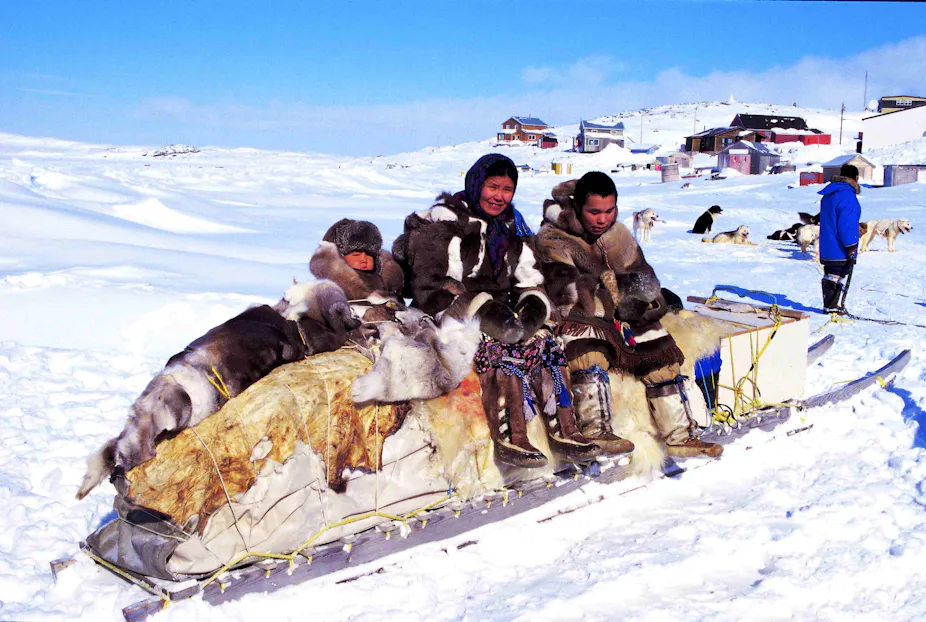
3. Studying human variation in the response to environmental stressors will help us understand the mechanisms that the human body uses to keep people alive. This information is essential to understand so that we may replicate it if it increases the likelihood of survival. For example, people get lost in differing climates when traveling and they may not know how to combat the cold properly.
4. One can use race to study the different ways the human body responds to environmental stressors such as cold climates. For example, one can see a correlation between skin color and locations of people across the world. Darker pigments of skin are located near the equator where the direct sunlight and radiation is more of an issue than those who live away from the equator with lighter skin. One can also relate the diet and cultural habits of certain races and compare that to the location of that race on a map. When doing this it will be seen that in the north, certain races of people eat more fatty foods as mentioned previously. This cultural adaption is a better way to understand human variation than race since environmental influences on adaption directly are a direct result of how humans deal with the cold. Race is purely a biological factor and isn't necessarily directly correlated with the variation of adaptions I listed previously such as drinking in the cold to keep warm.
2. According to the information in the modules humans have usually efficient internal temperature regulating systems to combat the extreme climate (palomar. This is to keep major organs warm so they can function properly. It is also stated that people have developed cultural patterns and technology to combat cold climates. Specifically, the Inuit located in northern regions of the western hemisphere consume large quantities of high calorie fatty foods to increase metabolic rate so they may take advantage of the heat produced by the process. People living in cold climates also drink alcohol to warm themselves up, although this is a temporary solution to combat cold. The most effective response to the cold is a cultural response of the use of insulating clothing, houses and fires.
3. Studying human variation in the response to environmental stressors will help us understand the mechanisms that the human body uses to keep people alive. This information is essential to understand so that we may replicate it if it increases the likelihood of survival. For example, people get lost in differing climates when traveling and they may not know how to combat the cold properly.
4. One can use race to study the different ways the human body responds to environmental stressors such as cold climates. For example, one can see a correlation between skin color and locations of people across the world. Darker pigments of skin are located near the equator where the direct sunlight and radiation is more of an issue than those who live away from the equator with lighter skin. One can also relate the diet and cultural habits of certain races and compare that to the location of that race on a map. When doing this it will be seen that in the north, certain races of people eat more fatty foods as mentioned previously. This cultural adaption is a better way to understand human variation than race since environmental influences on adaption directly are a direct result of how humans deal with the cold. Race is purely a biological factor and isn't necessarily directly correlated with the variation of adaptions I listed previously such as drinking in the cold to keep warm.
I really enjoyed your post, it seemed very detailed explaining how people adapt to cold weather. How if we didn't have this adaption ability it can really hurt us, or cause us death. in the section you wrote "The most effective response to the cold is a cultural response of the use of insulating clothing, houses and fires." this section made me realize that our ancestors practiced this particular adaption. They were able to survive some of the harsh weather they also encountered, with animal fur, staying in caves and building fires.
ReplyDeleteGood discussion in your first section. Why can't the human body function below that optimal level of 98.6 degrees? What happens to the circulatory system and the organs? Offer your readers more information here to help them understand why adaptations to this stress are so important.
ReplyDeleteI only see one image. You needed to provide four, one for each of the four types of adaptations.
You didn't follow the guidelines for the next section. You needed to identify four different types of adaptations to cold stress: Short term, facultative, developmental and cultural. Your section is more general here and doesn't identify these specific types of adaptations.
Note that drinking alcohol is NOT adaptive. In fact, it is dangerous, as it doesn't actually help the body retain heat. It actually gives the illusion of warmth, while fractionally reducing the body temperature. It also reduces your mental ability to figure out a way to get yourself out of the cold, increasing the likelihood of dying. Clothing and group sleeping are accurate examples.
What type of adaptation would eating fatty foods fall under?
Here are examples of the four types of adaptations you needed to include here:
Short term: Shivering
Facultative: Vasoconstriction
Developmental: Short, squat body shapes, as explained by Bergmann & Allen's rules.
Cultural: You do identify cultural adaptations with an image.
"...so that we may replicate it if it increases the likelihood of survival."
Most of these traits are biological/physiological/genetic and we have no control over them. None whatsoever. So how can this help us "adapt" to other climates and help us survive? Is there a way we can use this information in some concrete, technological way? Can knowledge on adaptations to cold climates have medical implications? Help us develop clothing that retains heat more efficiently? Can we develop new means of home/building construction that might help increase heat retention? How can we actually use this information in an applied fashion?
For your last section: Is that actually using race, or are you just using the adaptive response and layering race over top of it? Can you really use race to explain human variation? Understand that it is perfectly acceptable to answer this question with a "no".
"Race is purely a biological factor"
No, just the opposite, actually.
To answer this question, you first need to explore what race actually is. Race is not based in biology but is a social construct, based in beliefs and preconceptions, and used only to categorize humans into groups based upon external physical features, much like organizing a box of crayons by color. Race does not *cause* adaptations like environmental stress do, and without that causal relationship, you can't use race to explain adaptations. Race has no explanatory value over human variation.